A good VFD maintenance checklist focuses on heat, contamination, connections and records. Isolate the drive and wait for the DC bus to discharge, then inspect the environment, clean heat sinks and filters, check cooling fans, tighten terminals, review fault logs and back up parameters. Harsh sites need more frequent preventive maintenance than clean, cool electrical rooms.
Key Takeaways
- A VFD maintenance routine focuses on heat, contamination, connections and records.
- Drive DC-link capacitors can stay charged after power is removed, so wait the discharge time and verify zero voltage.
- For VACON NXS/NXP air-cooled drives, Danfoss lists routine checks every 6–24 months, fan changes at 5–7 years and DC bus capacitor replacement at 8–15 years.
- Disconnect the motor leads from the drive output before an insulation resistance test.
- Drives in harsh environments benefit from regularly scheduled preventive maintenance.
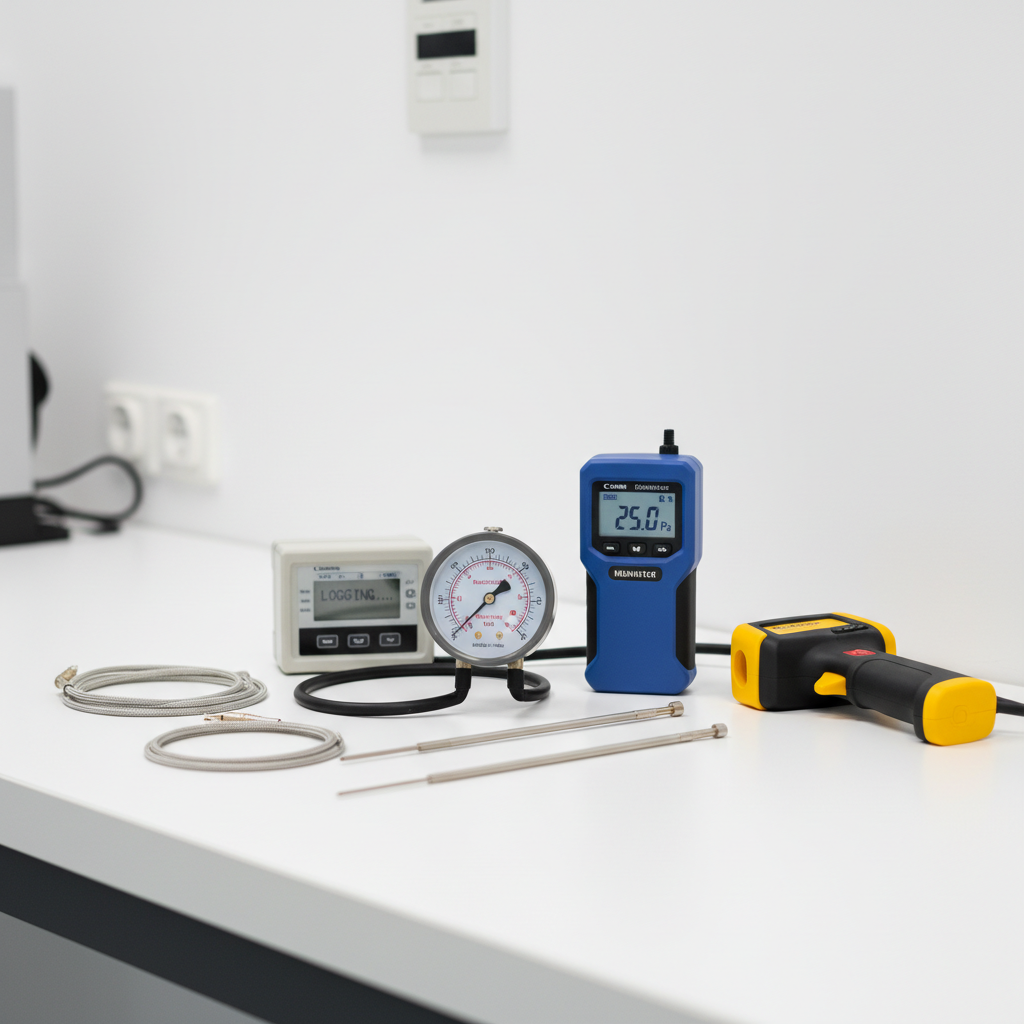
A variable frequency drive (VFD) is a motor controller that adjusts the frequency and voltage supplied to an AC motor to control its speed. Modern drives need less routine attention than most mechanical equipment, and they still benefit from periodic checks. According to Danfoss’s VLT operating guide, the drive is maintenance-free throughout its designed lifetime under normal operating conditions and load profiles, and it still advises examining the drive at regular intervals depending on operating conditions. Most real installations sit somewhere between ideal and harsh.
Why VFDs fail, and what VFD maintenance prevents
Most drive problems trace back to a small set of causes:
- Heat: Blocked heat sinks, failed fans and high ambient temperature shorten the life of power electronics and capacitors.
- Contamination: Dust, metal particles, moisture and corrosive gases build up on boards and cooling paths.
- Loose or corroded connections: Thermal cycling and vibration loosen terminals, which then overheat.
- Ageing components: Fans and DC bus capacitors wear out over time.
Danfoss notes in its DrivePro Preventive Maintenance fact sheet that while many drive installations need minimal maintenance, drives in highly demanding applications or harsh environments benefit from regularly scheduled maintenance by a professional drives technician.
Step-by-step VFD maintenance checklist
Always follow the operating guide for your specific drive model. The steps below reflect general good practice.
Step 1: Plan, isolate and verify
Schedule the work, follow your site’s lockout/tagout procedure and isolate the drive from all supplies. Drive DC-link capacitors can stay charged after power is removed, even when indicator lights are off, so wait the discharge time shown on the drive’s label and in its operating guide. Then verify zero voltage with a suitable meter before touching anything.
Step 2: Record the drive’s history
Before cleaning or adjusting, note the alarm and fault log, operating hours and any warnings. Back up the parameter set using the keypad or Danfoss’s VLT Motion Control Tool MCT 10 PC software, so you can restore settings after a repair or replacement.
Step 3: Inspect the enclosure and environment
Check ambient temperature, ventilation and clearances above and below the drive. Danfoss’s installation checklist calls for a panel interior free of dirt, metal chips, moisture and corrosion. Look for water ingress, damaged gaskets and blocked enclosure filters.
Step 4: Clean heat sinks, cooling channels and filters
Remove dust from heat sinks and cooling channels using methods your drive’s documentation allows, such as dry, oil-free compressed air or a vacuum. Clean or replace enclosure and door filters. Clogged cooling paths reduce heat transfer and can lead to overtemperature trips.
Step 5: Check the cooling fans
Confirm that fans spin freely, run without unusual noise and start when required. Fans are wear parts, so plan replacements based on the manufacturer’s schedule and the drive’s operating conditions.
Step 6: Check connections and grounding
Check power, motor and control terminals for discolouration, corrosion or looseness, and re-torque to the values in the operating guide. Danfoss’s checklist also calls for ground connections that are tight and free of oxidation, and control wiring kept separate from power and motor wiring.
Step 7: Check the motor and application
Inspect the motor, coupling and driven equipment for vibration, noise and heat. If you test motor insulation resistance, disconnect the motor leads from the drive output first, so the test voltage cannot damage the drive.
Step 8: Restart, verify and record
Restore power, run the drive through its normal range, and compare current, temperature and speed with previous readings. A thermal imaging scan of the panel under load can reveal hot connections. Record what you found and what you changed.
What Danfoss publishes for VACON NX drives
Danfoss’s VACON NXS/NXP air-cooled operating guide says the drives are maintenance-free in normal conditions, and recommends regular maintenance for correct operation and long life. Its published schedule is shown below. It applies to those models only, so use the guide for your own drive.
| Interval (per Danfoss) | Task |
|---|---|
| 6–24 months, depending on environment | Check terminal tightening torques; clean the heat sink and cooling channel; check mains, motor and control terminals; check that the cooling fan works; check for corrosion; check and clean door filters on IP54 standalone units |
| 5–7 years | Change the cooling fans |
| 8–15 years | Replace the DC bus capacitors; Danfoss states their life depends on ambient temperature and average load |
| Drives stored for more than 12 months | Reform the DC bus capacitors before use, following the guide’s procedure |
A note on spare drives
DC bus capacitors are the large electrolytic capacitors that smooth the rectified voltage inside the drive. Electrolytic capacitors in a drive that sits unpowered in stores can degrade over time. Danfoss’s VACON guide explains how to reform them before the drive goes into service. Include spare drives in your maintenance plan.
What Danfoss publishes for the VLT AQUA Drive FC 202
For the VLT AQUA Drive FC 202, Danfoss’s FC 202 design guide (2020.09 edition, section 9.2.6) gives approximate guidance. In most environments, Danfoss recommends maintenance intervals of approximately 3 years for the cooling fans and approximately 5 years for the capacitors. These figures are for the FC 202; other VLT drives have their own guides.
Preventive maintenance support from the drive and your supplier
Current Danfoss drives can help with their own upkeep. The VLT AQUA Drive FC 202, for example, can store scheduled service intervals as a preventive maintenance reminder, and offers condition-based monitoring that flags changes in motor and application behaviour.
Preventive maintenance is service carried out on a planned schedule to reduce the chance of an unplanned failure. For critical or harsh-duty drives, Danfoss offers DrivePro Preventive Maintenance. It begins with an on-site audit of the installation, environment and load profile, followed by scheduled inspections, planned component replacement and a report after each visit. Davis Controls also offers preventive, demand and shutdown maintenance, start-up and commissioning, and repair service for Danfoss VFDs through our service department.
For more on Danfoss drive families, lifecycle services and selection, see our guide to Danfoss VFD drives or visit our Danfoss drives page.
Frequently Asked Questions
How often should a VFD be maintained?
It depends on the drive model and its environment. Heat is the greatest threat to drive longevity. Dirtier, dustier and hotter environments require regular cleaning of the heatsink and fan filters, annually in the worst case.
Can I test motor insulation with the drive connected?
No. Disconnect the motor leads from the drive output before an insulation resistance test, because the test voltage can damage the drive’s power electronics.
What is capacitor reforming?
Capacitor reforming is a controlled, current-limited charge that restores the insulating layer in electrolytic DC bus capacitors after a drive has been stored unpowered. Danfoss’s VACON NX guide calls for it when a drive has been stored for more than 12 months.
Need help setting up a maintenance plan for your drives? Contact Davis Controls or call 1-800-701-7460.